If you are buying acreage in Long Valley, the house is only part of the purchase. On larger properties, your water source, septic system, and exact property lines can affect daily use, future plans, and even what you can repair or build later. A little extra due diligence up front can help you avoid expensive surprises after closing. Let’s dive in.
Why acreage in Long Valley needs closer review
Buying a home on acreage in Long Valley is different from buying a house on public utilities in a more densely served area. In this part of Morris County, private wells and individual septic systems are a real part of the property itself, not just background details.
That matters because New Jersey says private wells are not regulated like public water systems. Washington Township also identifies groundwater as the township’s drinking water source and uses local protections aimed at preserving water quality. For you as a buyer, that means the land, water, wastewater system, and recorded site details all deserve careful review before you remove contingencies.
Well testing in Long Valley
Private well testing is required in many sales
If the property has a potable private well, New Jersey’s Private Well Testing Act applies when the property is sold or leased. The water test results must be reviewed by both parties before title closes.
NJDEP states that transfer testing can include up to 43 parameters. Since the 2021 rule updates, real estate transfer samples must also include PFOA, PFOS, and PFNA.
The sample must meet state rules
For a valid transaction test, the water sample must be untreated. It also must be collected by a certified sampler or an authorized lab representative.
NJDEP sends the results to both the local health authority and the state. If local rules add more requirements, both the state and local standards must be met, and the stricter rule controls.
Do not rely on old test paperwork
One common mistake is assuming an older report is still usable. NJDEP says Private Well Testing Act results can only be used for one year after collection, and total coliform results are only valid for six months.
If a seller hands you old documents, treat them as background only. They may be helpful for context, but they are not a substitute for current, valid testing during your purchase.
What a failed well test may mean
A failed result does not always mean the water is unsafe in the same way. NJDEP separates primary standards, which relate to health concerns, from secondary standards, which are often tied to aesthetic issues like staining or taste.
That distinction matters because the next steps may be very different depending on what the report shows. In general, homeowners are responsible for treatment and maintenance costs, so it is smart to understand both the result and the likely fix before closing.
Ask for well records and repair history
Before you move forward, ask for any available well records, permits, and repair history. NJDEP also offers an individual well search process, and the department states that property owners are responsible for wells on their property.
If the well is older, shallow, hand-dug, or from before 1996, Morris County and NJDEP indicate it may be more vulnerable to contamination issues. That does not automatically make it a bad property, but it does mean you should review the records and test results carefully.
Septic systems deserve their own inspection
A septic inspection is not optional in practice
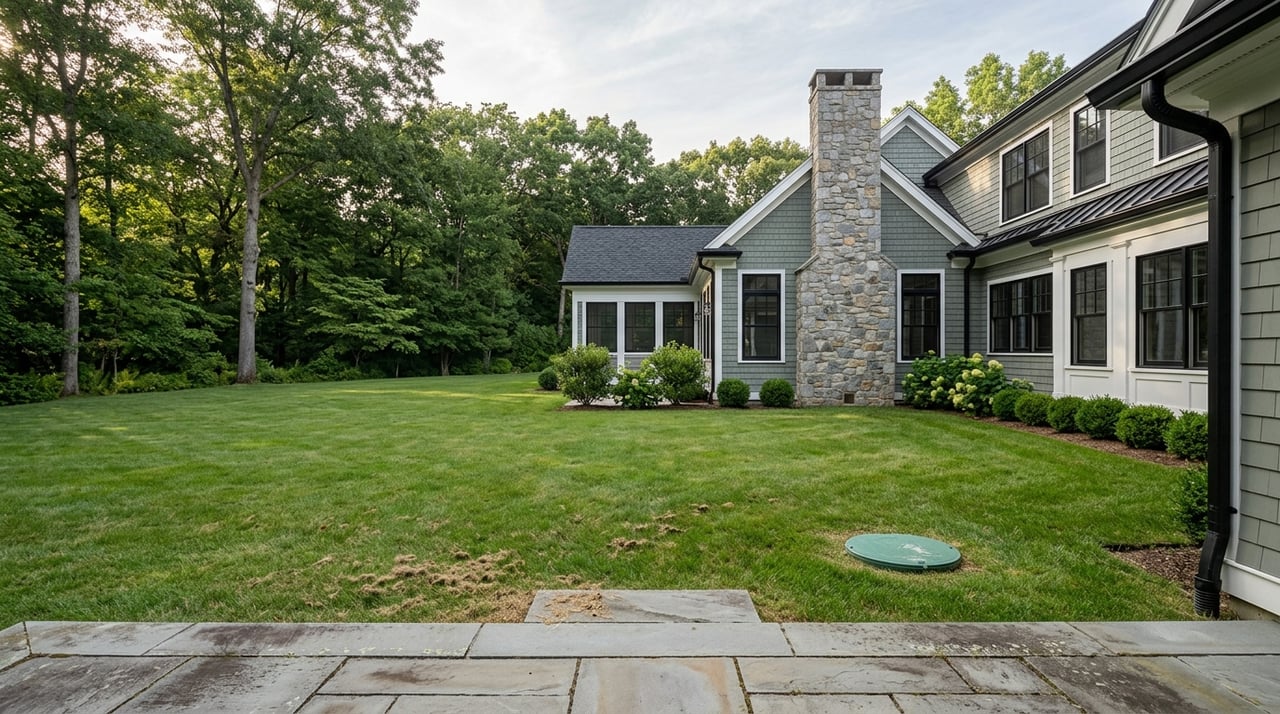
On acreage in Long Valley, a septic system should be treated as a major property component. NJDEP recommends that buyers secure a septic inspection before purchase.
That inspection can help confirm whether the system is functioning properly. It can also help you understand whether the current setup may support future additions, decks, swimming areas, or other improvements you may want later.
Basic septic records to request
Start with the basics. Ask when the septic tank was last pumped and whether there is a recent inspection report from a septic professional.
NJDEP explains that a conventional system includes a septic tank, an effluent distribution system, and a disposal field. Because sludge and scum remain in the tank, periodic pumping is part of normal maintenance, and a missing maintenance history is worth a closer look.
Washington Township may add stricter standards
Local rules matter here. Washington Township adopts state septic standards but can impose higher local requirements.
In subdivision-type review, township code requires the exact well and septic locations to be shown on the preliminary plat. For systems built before January 1, 1990, the code requires engineer certification that the system is in proper working order and a reserve area for future replacement.
Site conditions can affect repairs later
A septic issue is not always just a repair issue. On some acreage parcels, septic installation, repair, or replacement may involve environmental permitting depending on site conditions.
NJDEP notes that work near streams, wetlands, flood hazard areas, or riparian zones may require additional approvals. So if you are buying with plans to expand, build an accessory structure, or rework outdoor areas, this should be part of your review early in the process.
Why surveys matter on larger lots
A tax map is not a legal boundary
Many buyers look at parcel maps online and assume that is enough. It is not.
NJOGIS states clearly that parcel polygons are not legal boundaries and should not be used to determine ownership. For acreage purchases, that is especially important because driveways, fences, sheds, access paths, and other improvements may not sit exactly where you expect.
What a proper survey should show
New Jersey survey standards say that property lines, buildings and improvements, utilities, easements, topography, and wetlands delineation are functions for a New Jersey professional land surveyor. The survey should be signed, sealed, and prepared under state standards.
On a larger Long Valley parcel, a strong survey can help you confirm not just the home location, but also the relationship between the house, well, septic field, easements, and other visible site features.
Long Valley acreage brings added survey value
Washington Township’s plat rules show why surveys carry extra weight here. The rules may require exact well and septic locations, reserve areas for future septic replacement, deed restrictions, setback lines, and in some cases test holes or borings to confirm soil support.
For you, that means a survey is not just a closing formality. It can be one of the best tools for understanding what you are really buying and what constraints may come with it.
Your due diligence team
The right professionals matter
For a Long Valley acreage purchase, your review usually needs more than a general home inspection. At minimum, the process may involve a NJDEP-certified drinking water lab or authorized sampler, a septic inspector or engineer, a New Jersey licensed land surveyor, and the local health department.
For Washington Township, the local health department serves Long Valley, and state well testing results are sent to the local health authority as part of the transaction record. Since local rules can be stricter than state rules, it is wise to ask whether any parcel-specific requirements apply.
Questions worth asking before closing
Here are a few smart questions to raise during due diligence:
- What were the last well test results, and were they collected as an untreated sample by a certified sampler?
- When was the septic tank last pumped, and is there a recent inspection report?
- Is there a current survey showing the house, well, septic field, easements, and any reserve area?
- Are there wetlands, flood hazard, or riparian zone constraints that could affect repairs or additions?
- Do Washington Township rules add any requirements beyond the state well and septic rules?
A practical buying approach for Long Valley acreage
The safest way to think about an acreage purchase is simple: wells, septic systems, and surveys are part of the core property evaluation. They are not optional extras.
A solid due diligence sequence should verify water quality, septic condition, and legal boundaries before you remove contingencies. When you understand those pieces early, you can move forward with more confidence and fewer surprises.
If you are considering acreage in Long Valley or anywhere nearby in north-central New Jersey, working with a local advisor can make the process much smoother. For tailored guidance, property search support, and a practical plan for your next move, connect with Alexander Goldman-Spanja.
FAQs
What should you verify about a private well when buying acreage in Long Valley?
- You should confirm current Private Well Testing Act results, make sure the sample was untreated and collected by a certified sampler or authorized lab representative, and request any available well records, permits, and repair history.
Why is a septic inspection important for a Long Valley home purchase?
- A septic inspection can help confirm whether the system is functioning properly and whether it may support future plans such as additions, decks, swimming areas, or other site improvements.
Is a tax parcel map enough for a Long Valley acreage purchase?
- No. New Jersey parcel maps are a useful starting point, but they are not legal boundaries, so you should rely on a signed and sealed survey from a New Jersey professional land surveyor.
Can local Long Valley rules be stricter than New Jersey well and septic rules?
- Yes. Washington Township can impose requirements beyond state standards, so buyers should check with the local health department about any added parcel-specific rules.
What site issues can affect future septic repair or replacement in Long Valley?
- Streams, wetlands, flood hazard areas, and riparian zones can trigger additional permitting needs for septic installation, repair, or replacement depending on the property conditions.